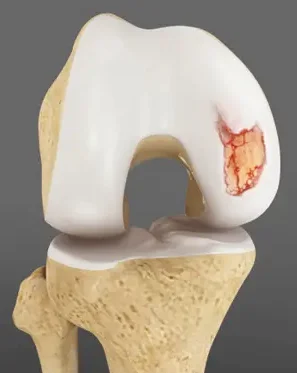
It is a condition that affects your joints. It usually develops in children and young adults.
Osteochondritis dissecans affects weight bearing Joints like Knee, Hips, Ankle. It is a disorder where a part of bone and overlying cartilage loses blood supply which makes it soften and weaken. Eventually, the affected part of bone along with cartilage dies and separates from the rest of your bone.
The loose bone and cartilage might remain in place or move into another area of your joint. This can make the joint locking, catching and unsteady or painful joint.
OCD usually affects joints like your:
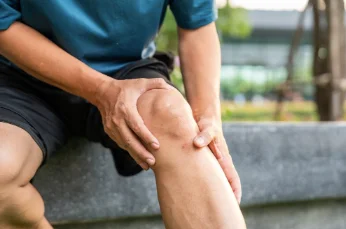
In later stages osteochondritis dissecans symptoms include:
You might feel symptoms more often or more intensely during or after physical activity or exercise.
The microtraumas or high-stress events that don’t damage a joint right away, but that can add up over time to cause joint injuries. Jumping, running and throwing can all cause microtraumas in your joints can lead to cartilage defects.
Anyone can develop OCD, but more common in:
Untreated defects or cartilage erosions can cause worsening symptoms over time and can lead to Arthritis and chronic pain.
We can easily diagnose osteochondritis dissecans with simple clinical examination and imaging tests like X rays and MRI scan.
Classification of defects in the knee cartilage using a grading scale
A grade IV lesion goes completely through all layers of the cartilage. It is diagnosed as a full-thickness lesion. Sometimes part of the torn cartilage will break off inside the joint. Since it is no longer attached to the bone, it can begin to move around within the joint, causing even more damage to the surface of the cartilage. This unattached cartilage piece is called as Loose body.
If Full-Thickness tear happens, surgery is usually recommended. We have to consider many factors for determining the right procedure to heal your joint.
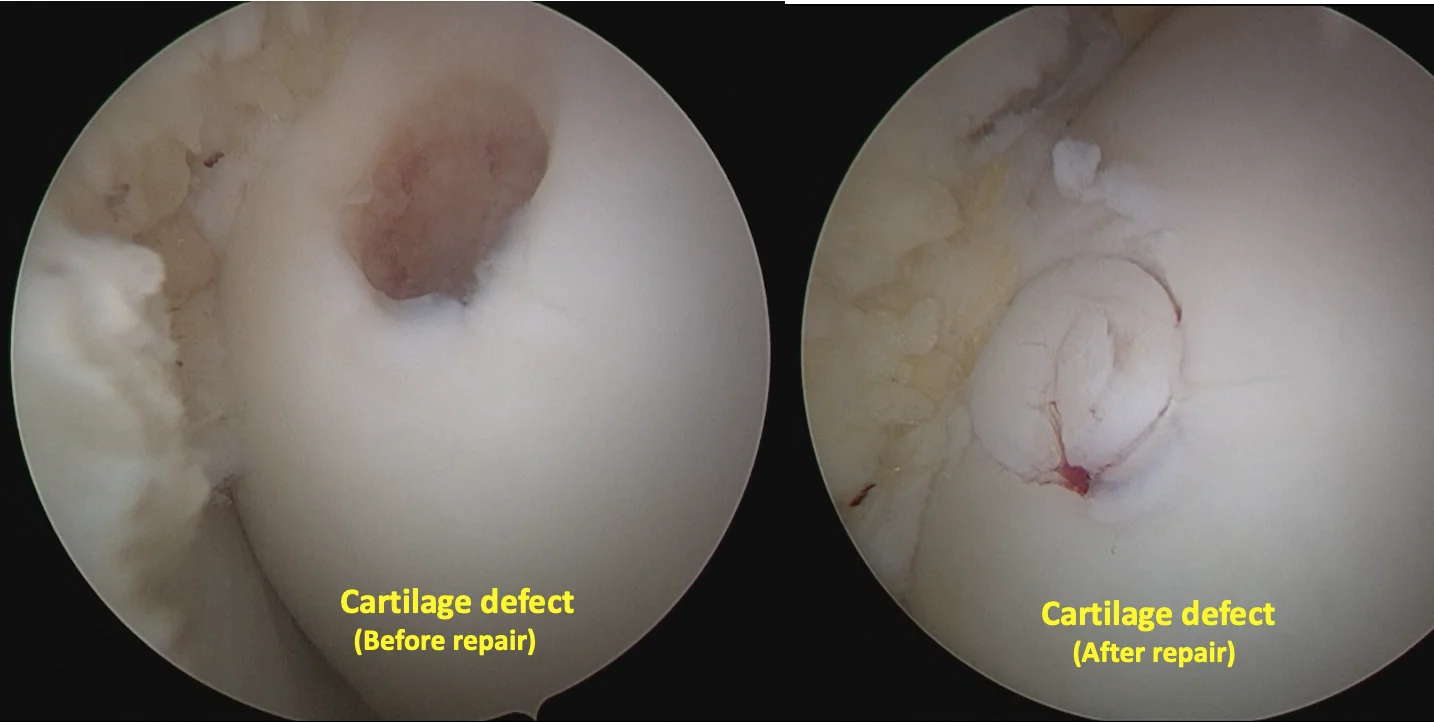
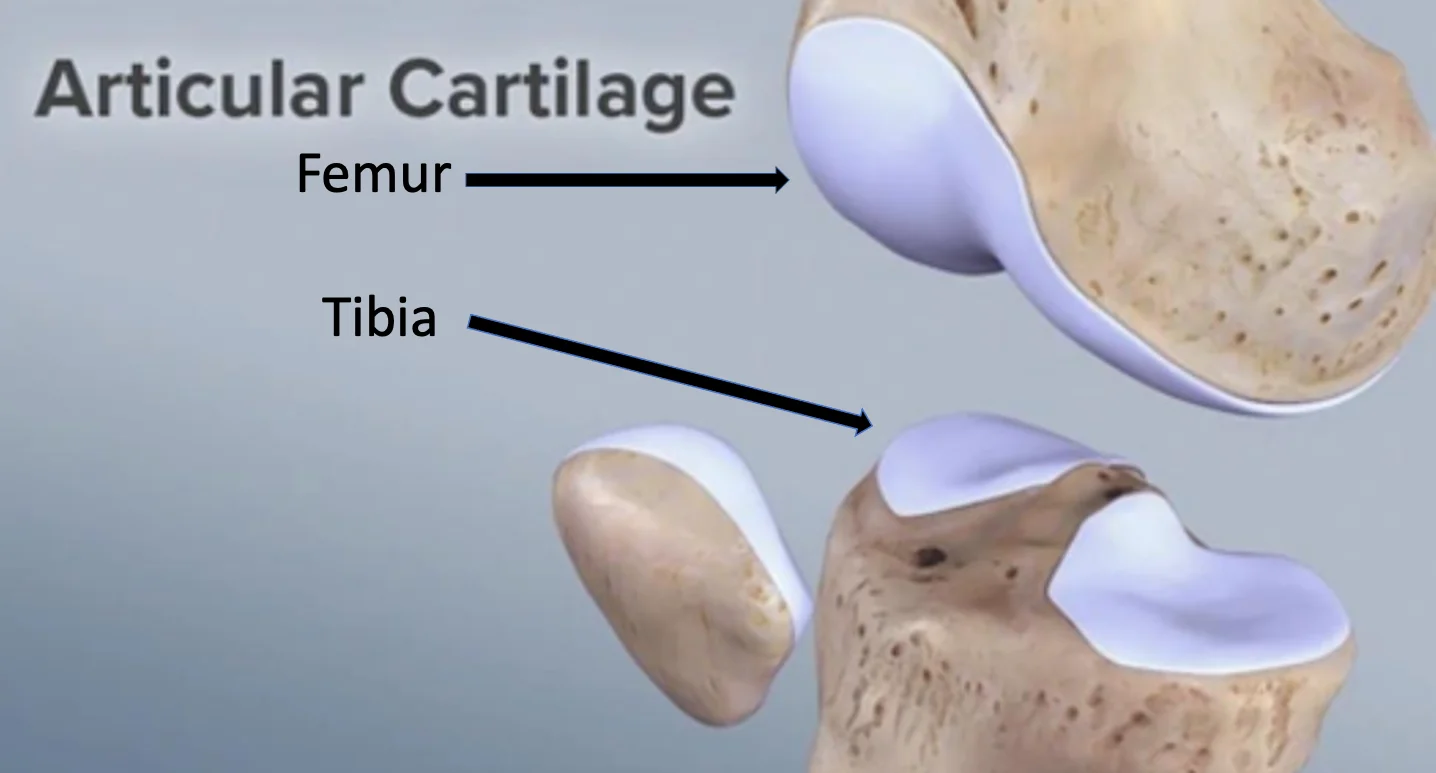
Minor grade defects (Grade 1-2) will heals well with conservative approach that includes :
If conservative treatment has failed to heal the joint with persistence of symptoms.
An Arthroscopic procedure might needed to heal the cartilage defect.
Which type of surgery you need depends on which joint has OCD and how severe is the damage.
I would like to help your joint returns to its natural state, with full function and no pain. This requires restorative surgery, meaning that the end result is a lesion filled to the full depth by tissue identical to the original. We rely on new advanced procedures to substitute or replace the original cartilage.
In these procedures, tissue is placed inside cartilage defect with the hopes of restoring the normal structure and function of the original cartilage.
In this method cartilage along with underlying bone harvested from non weight bearing area and transplanted on to the cartilage defect on weight bearing area. The place where the graft is taken is called the donor site. In this procedure, graft a small amount of bone (osteo) and cartilage (chondral) from the donor site is filled into the defect. Usually, the donor site for this procedure is on the non-weight bearing area of joint surface of the injured knee. We are very careful to take the graft from an area that won't cause any problems, usually on the top and outside border of the knee cartilage which doesn’t articulate. The Osteochondral Autograft transfer (OATS) procedure has mostly been used to treat osteochondritis dissecans (OCD).
This is a two stage procedure done for cartilage defects of bigger size more than 2.5 cm. A short Arthroscopic surgery is performed to take a few chondrocytes from inside the knee cartilage. These cells are grown in a laboratory. After 4 weeks once cartilage cells are cultured, the patient returns for a second surgery, during which the surgeon implants the newly grown cartilage into the lesion.
It is a single stage Arthroscopic surgery by using patients own healthy cartilage cells processed into fine chips which are mixed with blood plasma which is then implanted into cartilage defect using fibrin glue made from thrombin. Thereby, creating a natural scaffold for cartilage cells to grow. This offers a quick along with biological solution without the need of extensive culturing like ACI.
The final decision about which surgery to use will be based on your specific injury, age, activity level, and the overall condition of your knee.
Surgeons use an arthroscope, a tiny camera inserted into the knee during surgery, to see into the joint and clean up the joint by trimming edges of cartilage tear and removing loose bodies.
During arthroscopy the surgeon uses a special instrument known as a burr to perform Abrasion Chondroplasty. In this procedure, the surgeon carefully scrapes off the hard bone tissue from the surface of the joint. The scraping action causes a healing response in the bone. Later new blood vessels enter the area and fill it with fibrocartilage that is like articular cartilage. Fibrocartilage is weaker than normal articular cartilage. Because this is not true articular cartilage, it does not function as well for weight bearing as articular cartilage. The fibrocartilage that forms may not be strong enough to remove all the symptoms of pain in the knee.
Surgeons use a blunt awl or K wire to make a few tiny holes in the bone under the cartilage. Like abrasion arthroplasty, this procedure is used to get the layer of bone under the cartilage to produce a healing response. The fresh blood supply starts the healing response and triggers the body to start forming new cartilage (mainly fibrocartilage) inside the lesion. The stimulation methods and Restorative newer procedures are showing improved results in helping people return to normal activity.
Kids and teens usually don’t have long-term effects after a provider diagnoses and treats osteochondritis dissecans.
Osteochondritis dissecans usually doesn’t recur once healed.
Kids and teens with osteochondritis dissecans are more likely to heal with only rest and time. If there is no relief in symptoms even after 2 weeks then consult doctor.
Adult having cartilage defects are less likely to heal over time because of less growth & healing potential.
Most people need 2- 4 months to heal. We will provide you the detail of which kinds of physical activities are safe to do while you’re recovering.
Recovering from osteochondritis dissecans surgery usually takes around two months. You’ll need physical therapy for a few weeks after that to regain your strength and range of motion.
With the exception of those who undergo a simple debridement, our patients will be instructed to avoid putting too much weight on their foot when standing or walking for up to six weeks. This gives ample time to cartilage to heal.
You may require a walker or pair of crutches for up to six weeks to avoid putting too much pressure on the joint when you are up and about.
We will guide you the exercises to help improve knee motion and to get your muscles toned and active again. At first, we will place emphasis on exercising the knee in positions and movements that don’t strain the healing part of the cartilage. As your program evolves, we will choose more challenging exercises to safely advance the knee’s strength and function.
Ideally, you will be able to resume their previous lifestyle activities.
Our goal is to help you keep your pain under control, ensure safe weight bearing, and improve your strength and range of motion.

Morning:
Yatharth Hospital (9:00 A.M - 4:00 P.M)
Evening:
Pitampura (5:00 P.M - 7:00 P.M)
Copyright © 2025 Sports Injuries Joint Replacement. Powered by TechPropellers.