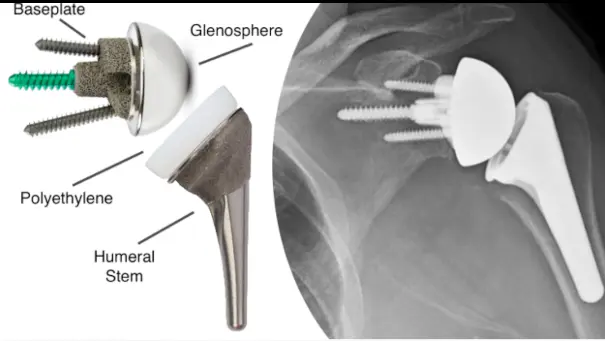
A Reverse Shoulder Replacement is another way to repair a badly damaged shoulder when a traditional shoulder replacement just won’t work—often because the rotator cuff is too torn or weak to support a regular implant.
Overview
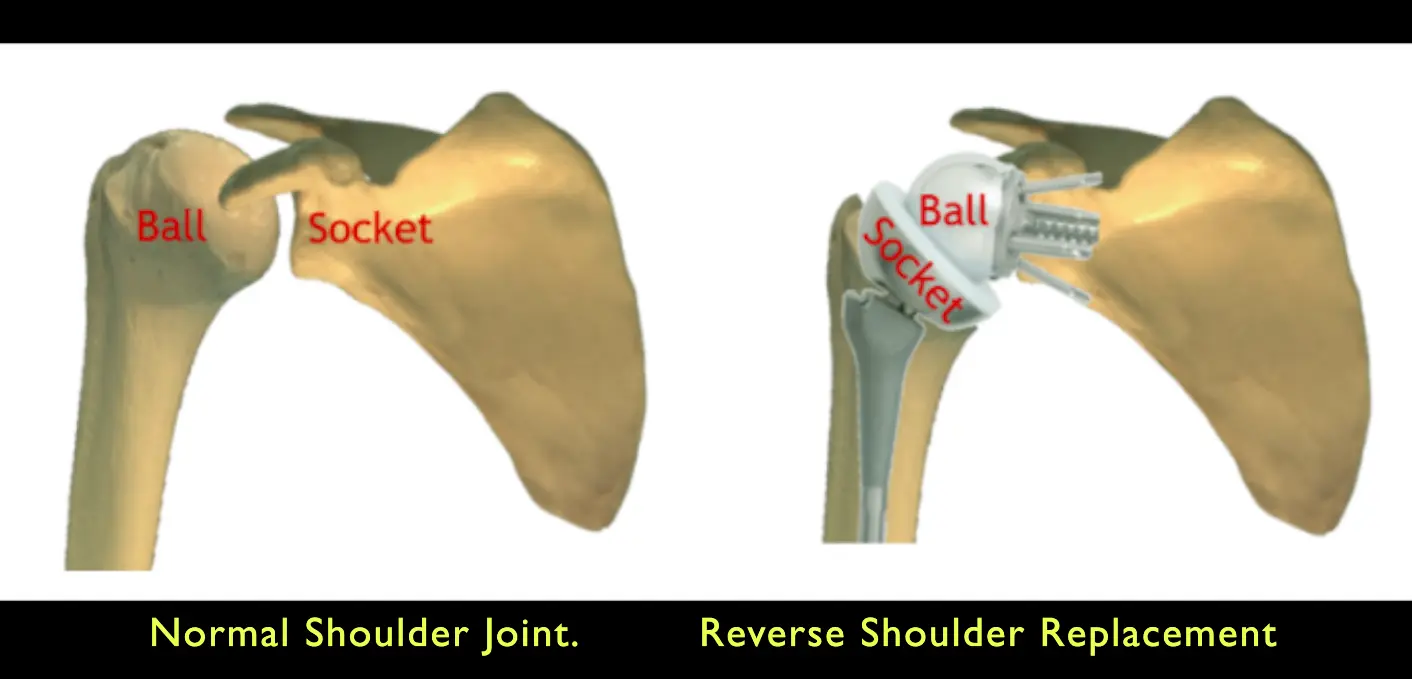
Reverse shoulder replacement gets its name from how the new joint is arranged. Instead of placing the artificial ball on the upper arm (Head of Humerus) and the socket on glenoid of the shoulder blade—like your natural shoulder—the surgeon switches them. It’s literally reversed.
What Is a Reverse Shoulder Replacement?
A reverse shoulder replacement is a type of shoulder joint replacement surgery (also called a reverse total shoulder arthroplasty).
During the procedure, your surgeon removes the damaged parts of your shoulder and replaces them with artificial components made of metal and plastic.
Normally, the top of your upper arm bone (Humerus) has a round “ball” that fits into a “socket” on your shoulder blade (the glenoid).
With a reverse replacement, your surgeon flips their locations:
A metal ball is attached to your shoulder blade.
A plastic-lined socket is placed on the top of your upper arm.
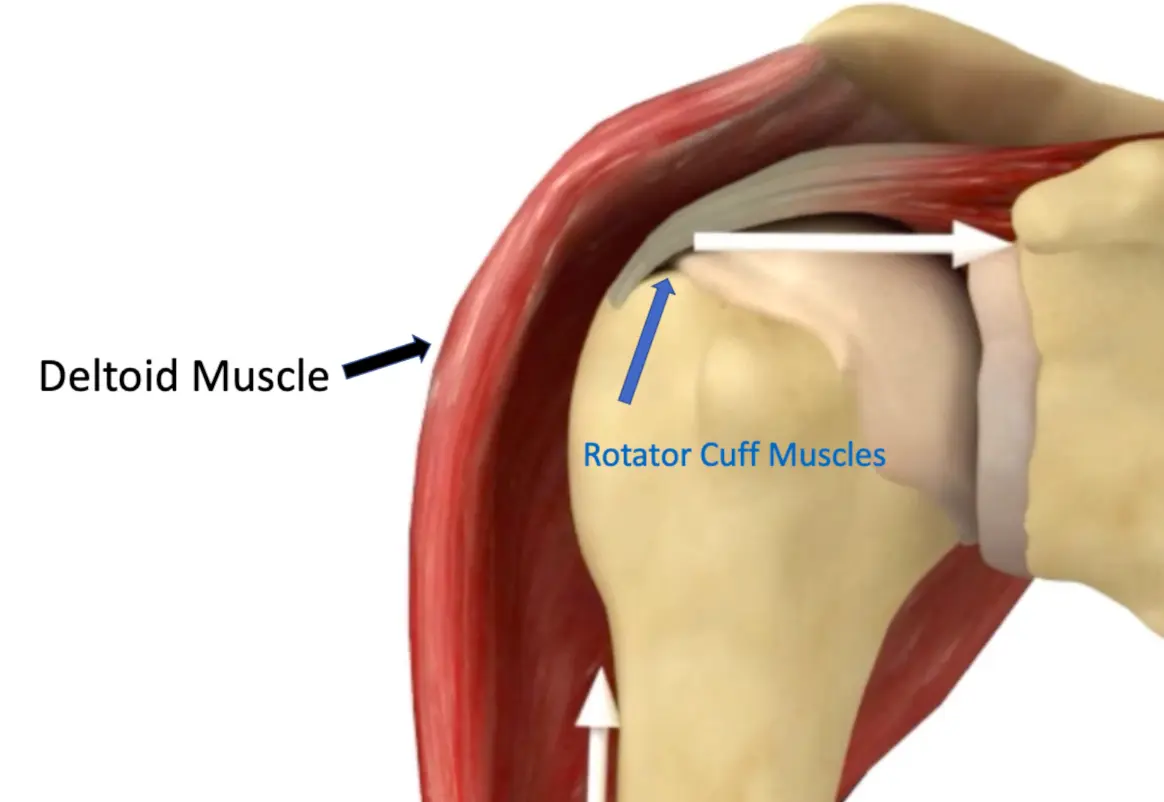
Reversing the parts allows other muscles—mainly the deltoid—to take over the work your rotator cuff can’t do anymore.
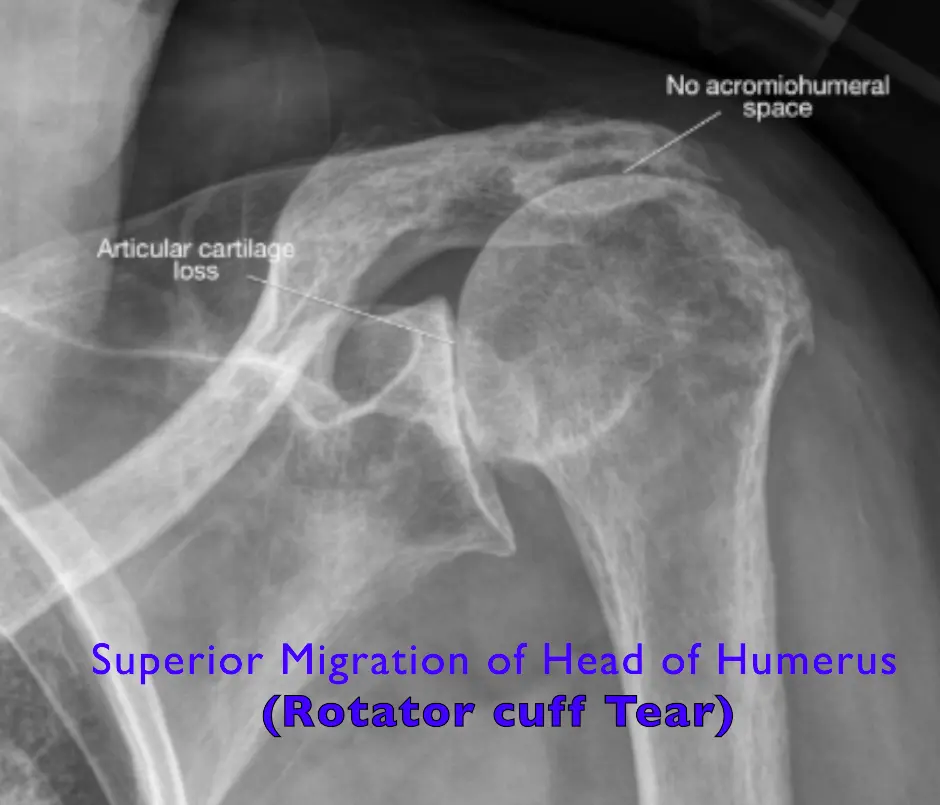
Severely arthritic Shoulder joint with incompetent Rotator Cuff.
In these cases, reversing the ball and socket gives the joint more stability and helps you regain better strength and motion.
Preparing for Surgery
Your healthcare team will walk you through the prep, which may include
A dental check (to lower infection risk)
A full physical exam
An ECG
Blood-workup
Imaging (X-ray, MRI or CT scan)
Tell your surgeon about all medications and supplements you take. You may need to pause some of them before surgery.
You’ll also get instructions about when to stop eating or drinking—usually about 8 hours before surgery.
During The Procedure, Your Surgeon Will
Make an incision around your shoulder
Remove damaged bone and cartilage
Attach the metal ball to your shoulder blade
Insert the socket piece into your upper arm bone
Re-align the joint
Close the incision with stitches
Most surgeries take about 1 to 2 hours.
Benefits
Reverse shoulder replacement can
Dramatically reduce shoulder pain
Improve shoulder function
Increase mobility
Offer an option for people whose Rotator cuff muscles are torn and irreparable.
Possible Downsides or Risks. As with any surgery, complications are rare but can include:
Infection
Fractures around the implant
The implant wearing out or loosening earlier than expected
Recovery
After surgery, you’ll rest in a recovery area while the anesthesia wears off.
Typical recovery timeline:
First 4 weeks:Wear a sling; limit movement
Pain control: routine analgesics (NSAIDS)
Immediately a day after Surgery: Start physical therapy
Gradual return to normal activities
Full recovery: Around 6 weeks
You may need to avoid heavy lifting or intense workouts for a while—your surgeon will guide you on what’s safe.
How Long Does It Last?
Reverse Shoulder Replacement usually last 15 years or more. Many people never need another surgery.
Surgeon’s Note
A Reverse Shoulder Replacement doesn’t mean the surgeon wears their gear backward—it’s just a different, clever way to rebuild the joint when the rotator cuff can’t do its job.
Even though you may have some movement limits afterward, most people experience huge improvements in pain and daily function.