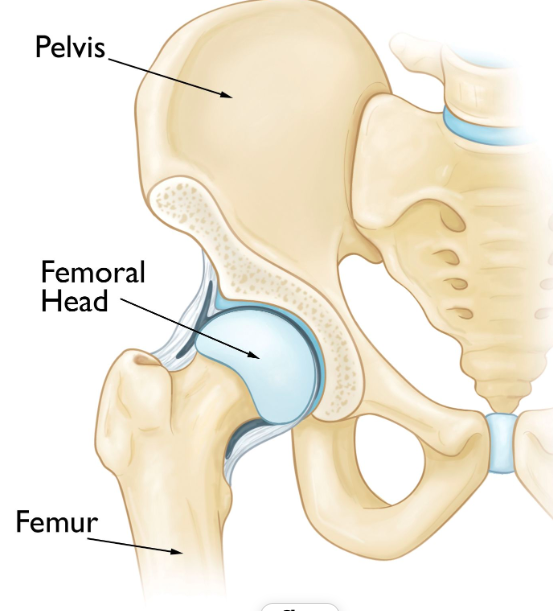
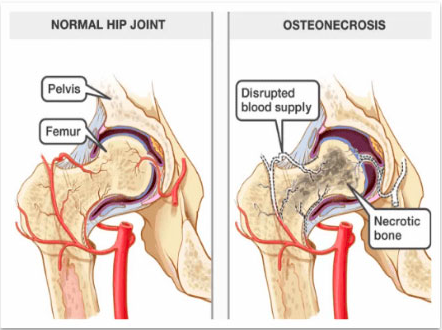
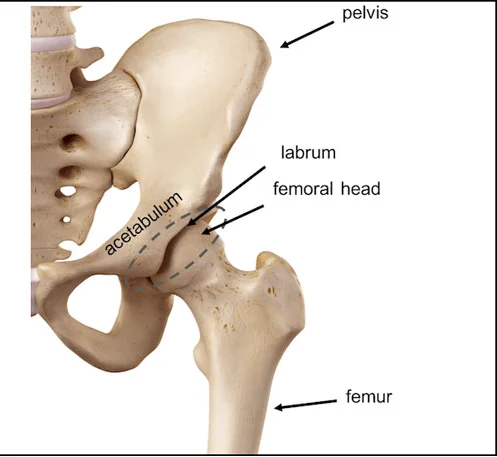
Avascular necrosis (AVN) happens when blood can’t reach head of femur and Hip joint tissue begins to die. Without treatment, this condition can get worse so that dead bone eventually breaks down or crumbles. The disease may affect any bone in your body. But it most often affects:
Avascular necrosis can worsen over time. Early diagnosis and treatment may keep the disease from causing more damage to your Joint.
Avascular necrosis is a disease that results from the short-term (temporary) or lifelong (permanent) loss of blood supply to the bone. When blood supply is cut off, the bone tissue dies and the bone can collapse. If avascular necrosis happens near a joint, the joint surface may collapse.
Several factors can increase your risk of developing avascular necrosis of the hip, a condition that can lead to hip pain, stiffness, and joint collapse if left untreated.
Fractures or dislocations that disrupt blood flow to the femoral head.
Medications that can affect circulation and bone health.
Prolonged alcohol use can damage blood vessels and bone tissue.
Such as sickle cell disease, lupus, diabetes, and autoimmune disorders.
The leading issues and diseases that may necessitate hip replacement surgery are:
Caused by a physical injury such as a fracture or a dislocated joint which physically damages the blood vessels supplying the bone.
Caused by medical factors or lifestyle habits, including:
- Long-term use of Corticosteroids (such as Prednisone): After COVID pandemic Avascular necrosis of hip joint effecting people has increased several folds.
- Excessive alcohol consumption and smoking.
- Medical conditions like Sickle Cell Anaemia, Pancreatitis, Lupus, HIV or Gaucher disease.
- Radiation Therapy in cancer :Radiation or chemotherapy treatments which can weaken bone and affect vascular health.
- High cholesterol levels can block small blood vessels that nourish bone tissue.
- Genetic predisposition or idiopathic causes: AVN can sometimes develop without a known cause.
- Decompression sickness (commonly known as "the bends").
Treatment is highly dependent on how early the condition is caught. We use Clinical & MRI Staging to determine the best approach:
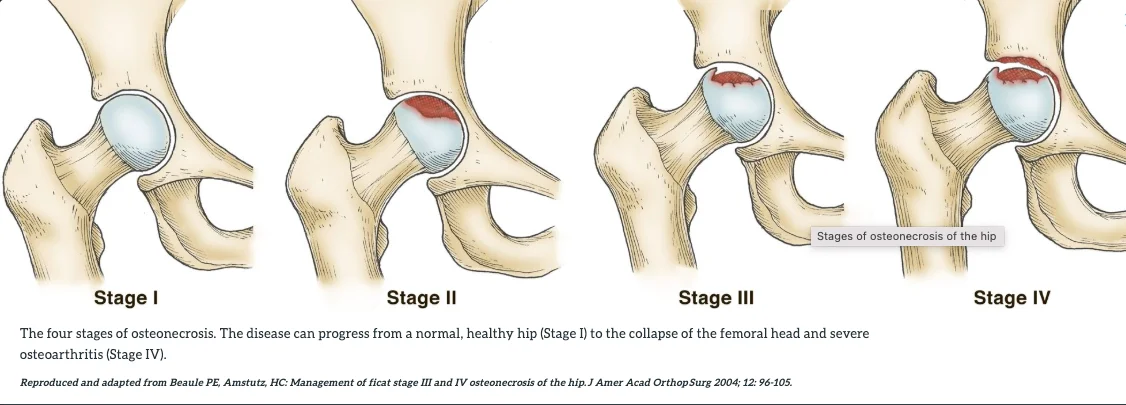
Condition: X-rays look normal, but an MRI shows early signs of bone death or swelling.
Treatment: Non-Surgical Management.
This includes pharmacological therapy (Bisphosphonates to prevent bone collapse, statins, or vasodilators) combined with physical therapy and regular follow-ups to monitor progression & can be managed without surgery.
Condition: First visible changes on X-ray, such as bone hardening (sclerosis) or cysts, but the ball of the hip is still round.
Treatment: Core Decompression
Core decompression is done under spinal or general anesthesia.
A small incision is made on your hip and a guide wire is passed from the incision through the neck of the femoral bone to the necrotic/ dead area in the femoral head. A hole is then drilled along the wire. The necrotic bone is then removed. This reduces the pressure immediately and creates space for the new blood vessels to grow and nourish the existing bone.
The incision is then closed with sutures. Another variation of the same surgery involves drilling very small diameter holes from a single point. The surgical wound in this case is very small and may require only a single suture. This operation is thought to do two things: (1) it creates a channel for new blood vessels to quickly form into the area that lacks blood supply, and (2) it relieves some of the pressure inside the bone of the femoral head. Relieving this pressure seems to help decrease the pain patients experience from AVN.
Decompression is often accompanied by the use of bone grafts with or without growth factors, a procedure designed to stimulate bone growth at the site of the defect. The donated bone comes from the patient (taken from the pelvic bone or lower leg). The bone is crushed up into tiny pieces and applied to the hole or defect caused by the necrotic process.
Condition: The articular surface of the hip ball begins to flatten & joint space begins to narrow.
Treatment: Rotational Osteotomy or Total Hip Replacement
As the bone structure begins to fail, the focus shifts toward managing the inevitable transition to joint restoration; at this stage, Either Rotational Hip Osteotomy or Total Hip Replacement provides the most reliable long-term outcome, as Core Decompression is no longer successful in preventing further joint degeneration once collapse has occurred.
Condition: The hip joint has collapsed significantly, leading to secondary osteoarthritis and a dysfunctional, painful joint. Patient walks with limp and uses walker or crutches.
Treatment:
Total Hip Replacement (THR). This is the most effective treatment for Stage 4. The damaged bone is replaced with an artificial joint, allowing for a complete return to a pain-free & active life.
Which is nothing but stem cell therapy. The Bone marrow is harvested, centrifuged and injected into head of femur after core decompression.
To help regrow healthy bone cells. This is latest advancement in which bone marrow is aspirated and sent to Cell Biology REGROWW lab where osteoblasts are cultured and after 4 weeks at time of core decompression procedure the osteoblast culture is injected in head of femur. The osteoblasts injected proliferate into bone cells which heals Avascular hip and return the patient back to normal daily activities.
The bone graft is harvested from illiac crest (Bone in pelvis) and grafted into head of femur which causes new bone formation and heals the hip joint.
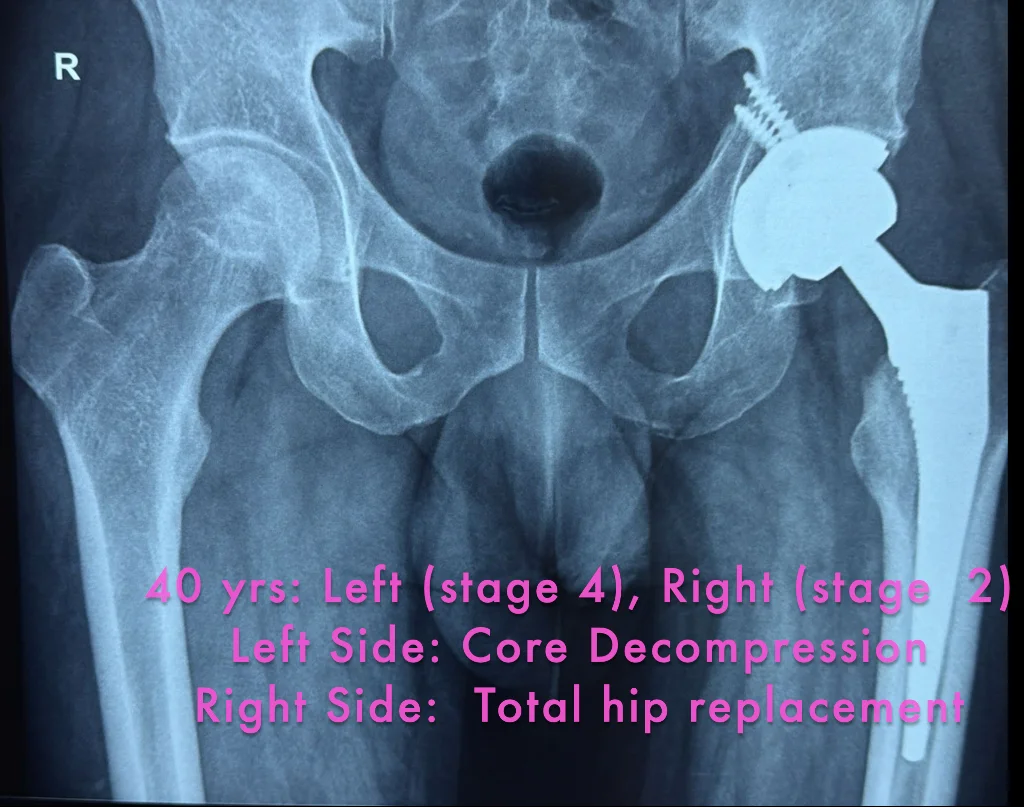
After the operation, crutches are to be used for 6 to 8 weeks to prevent weight bearing at the hip joint until the femur bone heals completely. You will be able to resume your regular activities 3 months after the surgery.

Treatment depends mainly on your Stage, Age and general health. Don’t ignore symptoms of AVN. It is wise to diagnose early and start treatment. You might get cure with simple treatment and also preserve natural hip joint rather to repent when it is too late and then only treatment left is Total Hip Replacement.
While Hip AVN can significantly impact your mobility, it is not life-threatening. With early diagnosis—especially through MRI—many patients can avoid or delay major surgery. If the condition is advanced, modern hip replacement technology offers an excellent prognosis for restoring quality of life.
Morning:
Yatharth Hospital (9:00 A.M - 4:00 P.M)
Evening:
Pitampura (5:00 P.M - 7:00 P.M)
Copyright © 2025 Sports Injuries Joint Replacement. Powered by TechPropellers.