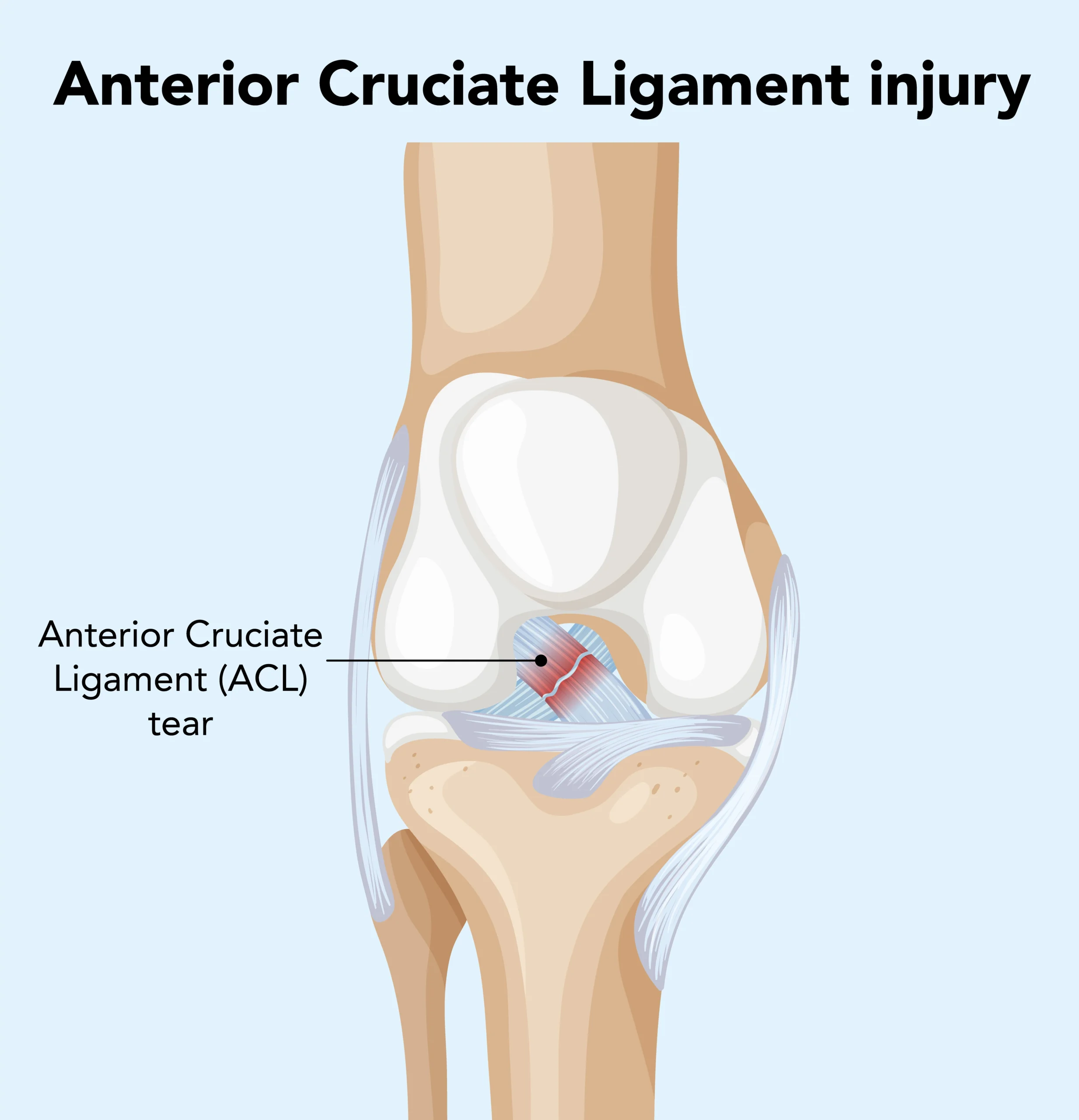
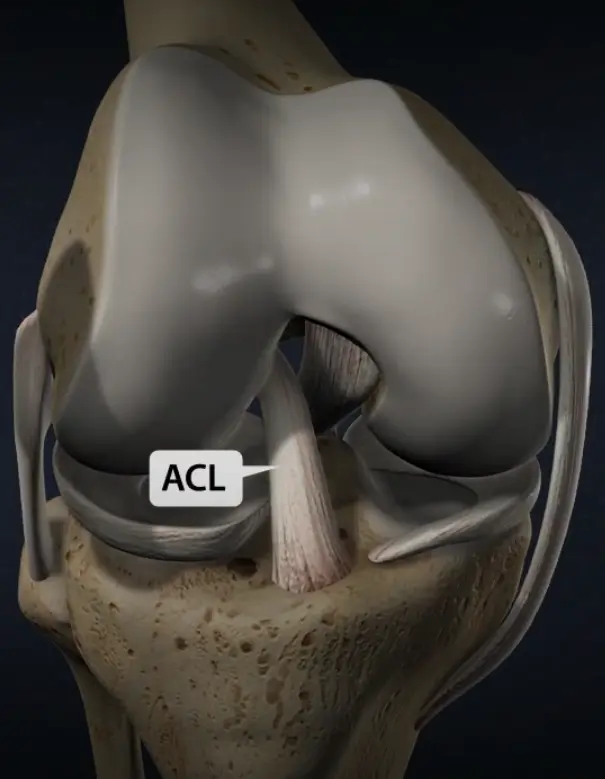
An ACL injury is a tear or sprain of the anterior cruciate ligament. ACL is one of the strong bands of tissue that help connect your thigh bone (femur) to your leg bone (tibia). ACL is like a connecting strap that prevents your knee from bending or rotating too much. Anything that puts enough force on your knee to bend or twist it farther than its natural limit can injure or tear your ACL.
ACL injuries most commonly occur during sports that requires sudden stops or changes in direction, jumping and landing — such as cricket, football, basketball, badminton, treadmill running, wrestling, kabaddi, kho -kho and skiing.
It is very common to hear a pop or feel a “popping” sensation in the knee when an ACL injury occurs. The knee gets swell, feel unstable as if you are about to fall especially while running fast or during frequent change in direction and become too painful to bear weight.
Depending on the severity of your ACL injury, treatment may include rest and rehabilitation exercises to help you regain strength and stability, or surgery to repair the torn ligament in ACL avulsion or to replace the torn ligament followed by rehabilitation.
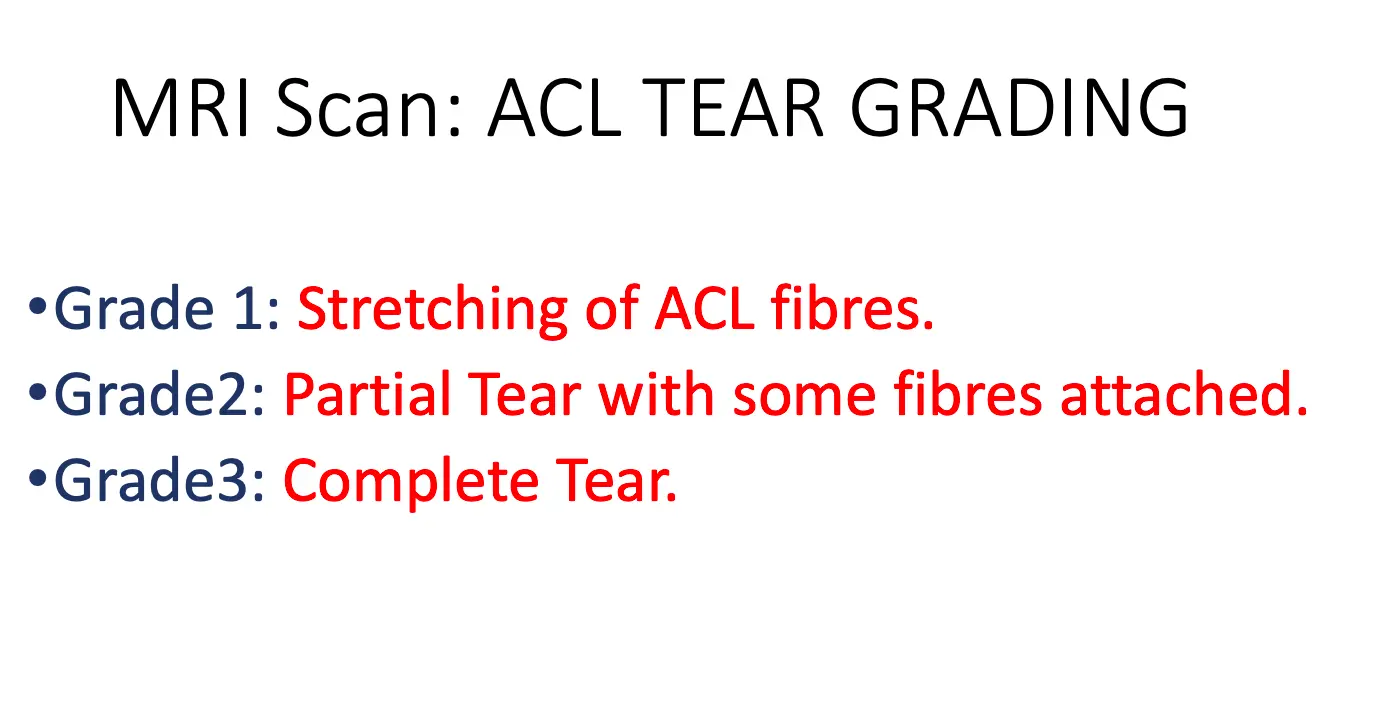
The injury stretched your ACL enough to damage it, but it’s still intact and holding your knee bones together.
The injury stretched your ACL so much that it was partially torn and loosened.
A complete tear.
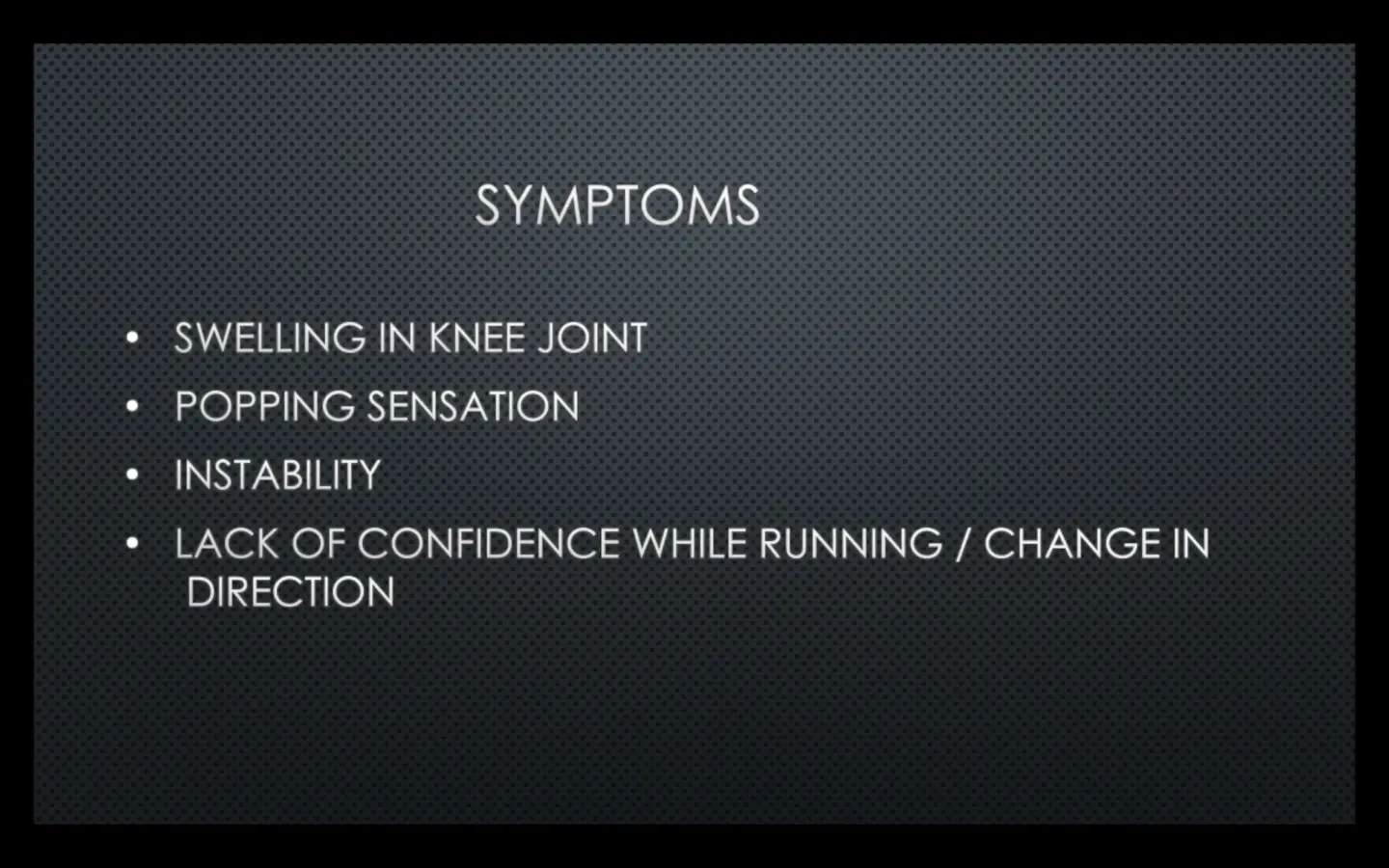
Seek immediate care if any injury to your knee causes signs or symptoms of an ACL injury. It is wise to get a prompt and accurate diagnosis to determine the severity of the injury and get proper treatment.
Ligaments are strong bands of tissue that connect one bone to another. The ACL is a ligament that connects your thighbone to your shinbone and helps stabilize your knee joint.
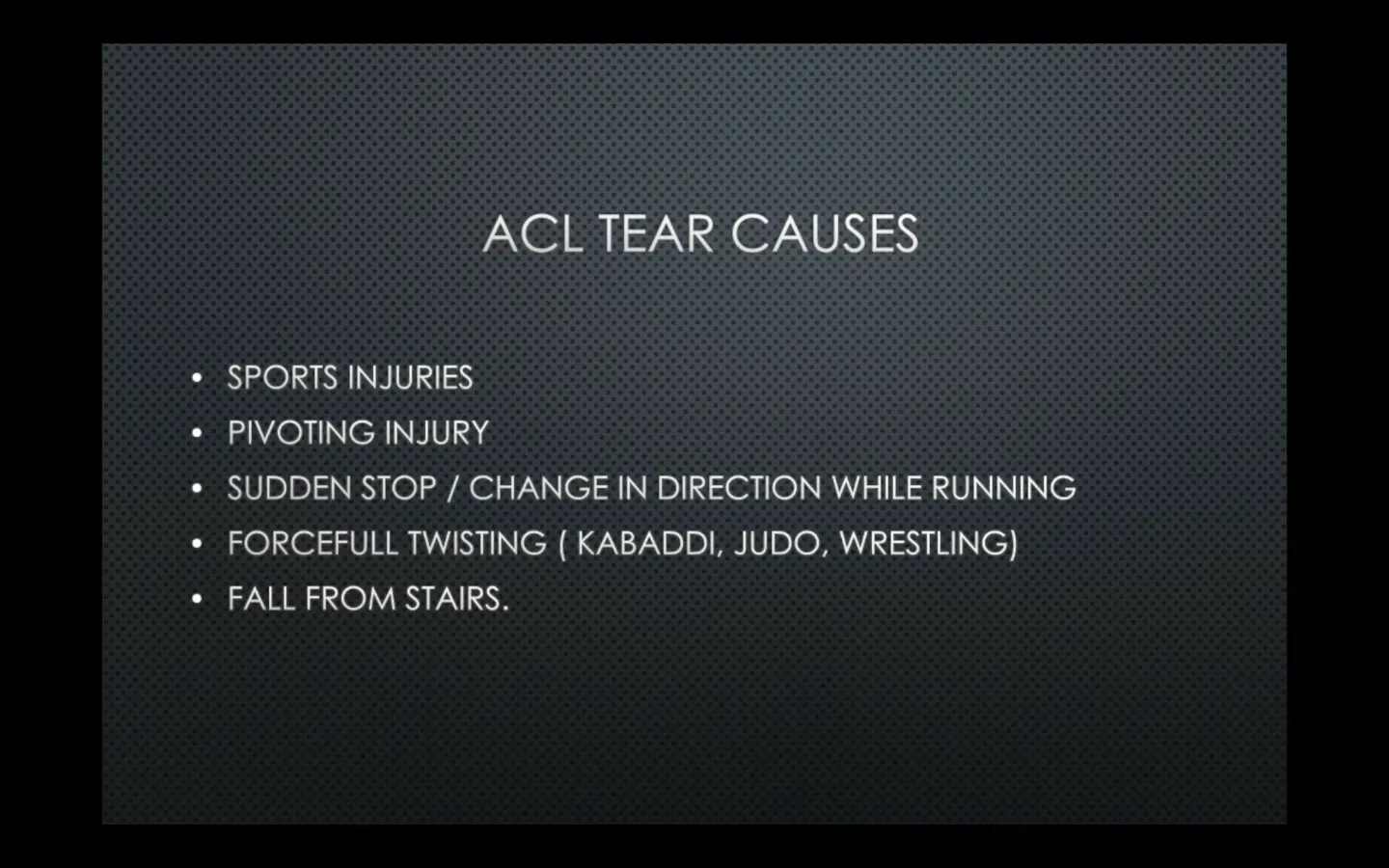
ACL injuries often happen during sports and fitness activities that can put stress on the knee especially during
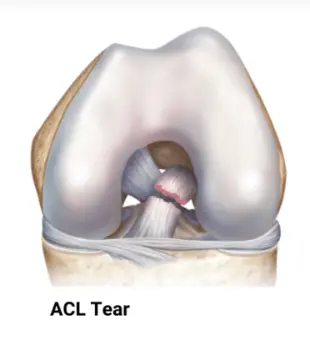
The outcome of ACL injury can be that there is usually a partial or complete tear of the tissue. A mild injury may stretch the ligament but leave it intact which is ACL sprain.
People who experience an ACL injury have a higher risk of developing osteoarthritis in the knee.
Arthritis may occur even if you have surgery to reconstruct the ligament.
Proper training and exercise can help reduce the risk of ACL injury. A sports medicine physician, physical therapist or an athletic trainer can provide assessment, instruction and feedback that can help you reduce risks.
Programs to reduce ACL injury include:
Training to strengthen muscles of the legs, hips and core — as well as training to improve jumping and landing techniques and to prevent inward movement of the knee — may help to reduce the higher ACL injury risk in female athletes.
Wear footwear and padding that is appropriate for your sport to help prevent injury. If you downhill ski, make sure your ski bindings are adjusted correctly by a trained professional so that your skis will release appropriately if you fall.
Wearing a knee brace doesn't appear to prevent ACL injury or reduce the risk of recurring injury after surgery.
During the physical exam, your doctor will check your knee for swelling and tenderness — comparing your injured knee to your uninjured knee. He or she may also move your knee into a variety of positions to assess range of motion and overall function of the joint.
Often the diagnosis can be made on the basis of the physical exam alone, but you may need tests to rule out other causes and to determine the severity of the injury.
These tests may include:
The immediate first-aid care aims at alleviating pain and swelling. It comprises of the R.I.C.E. model of self-care at home:
The Doctor will suggest treatments to manage your pain and other symptoms.
A torn ACL can’t heal on its own, but it’s possible to live with it (especially if you have a low-grade tear). But if you’re an athlete or want to return to physical activity, you’ll need surgery to repair your ACL. Most people choose to have an complete ACL tear surgically repaired.
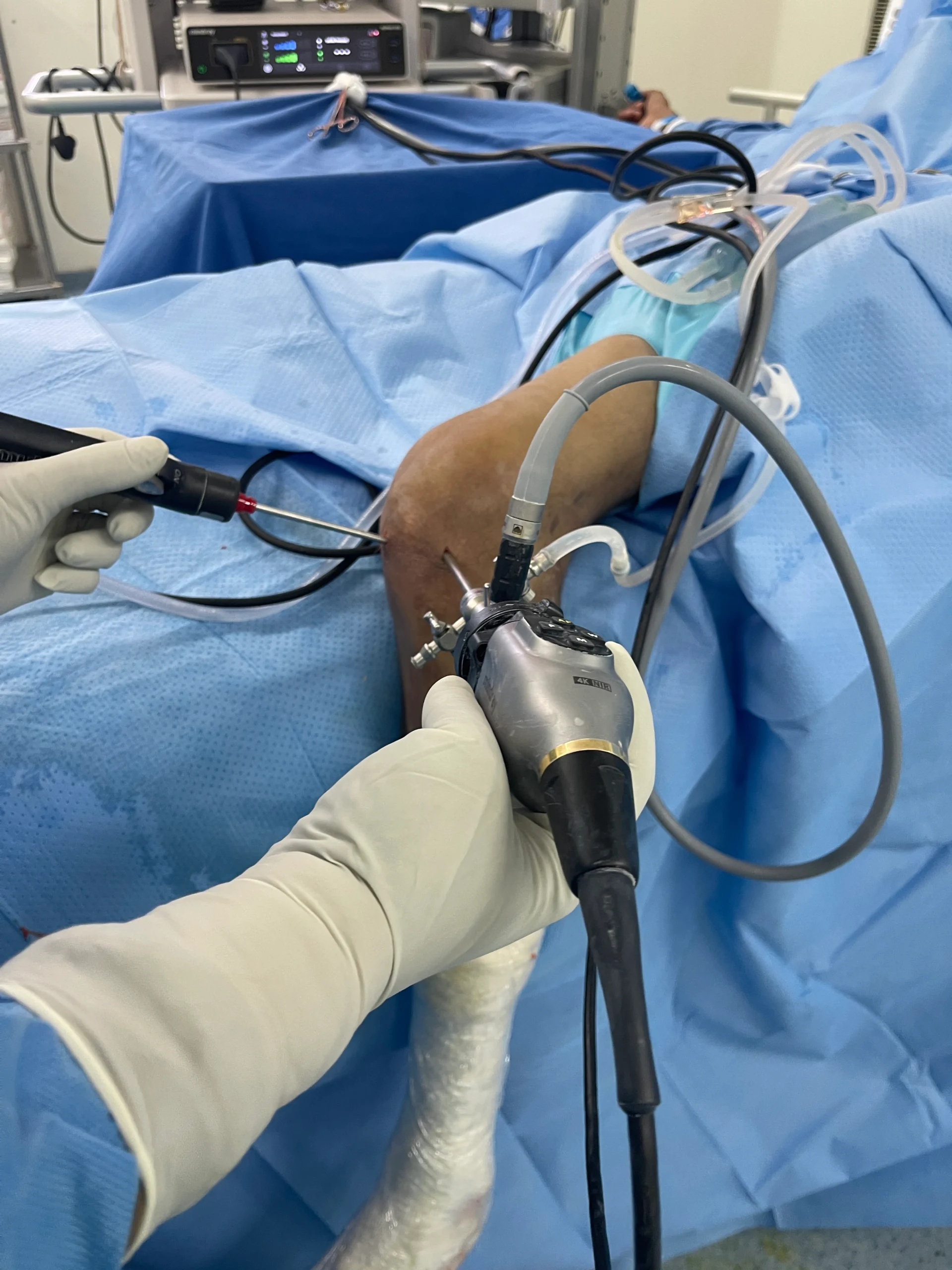
Surgery is safe and a short duration procedure, which means you can go home same day or next day of surgery. Your surgeon will perform a knee arthroscopy, a minimally invasive technique to repair or reconstruct the ligament inside your knee.
Medical treatment for an ACL injury begins with several weeks of rehabilitative therapy. A physical therapist will teach you exercises that you will perform under continued supervision. You may need to wear a brace to stabilize your knee and use crutches for a while to avoid putting weight on your knee.
The goal of rehabilitation is to reduce pain and swelling, restore your knee's full range of motion, and strengthen muscles. This course of physical therapy may successfully treat an ACL injury for individuals who are relatively inactive, engage in moderate exercise and recreational activities, or play sports that put less stress on the knees.
During ACL reconstruction, the surgeon removes the damaged ligament and replaces it with a segment of tendon — tissue similar to a ligament that connects muscle to bone. This replacement tissue is called a graft. The graft is fixed on femur and tibia.
The surgeon will use a piece of tendon from another part of your knee. The graft options includes:
After surgery a course of rehabilitative therapy is needed in most of the cases. Successful ACL reconstruction along with rigorous rehabilitation can usually restore stability and function to your knee to pre injury level.
There’s no set time frame for athletes to return to play.
In general, it takes as long as 9 months to an year before athletes can safely return to high level sports. Doctors and physical therapists will perform tests to gauge your knee’s stability, strength, function and readiness to return to sports activities at various intervals during your rehabilitation. It’s important to ensure that strength, stability and movement patterns are optimized before you return to an activity with a risk of ACL injury.
It usually takes six to nine months to recover from a torn ACL. High level athletes may need a little longer than this to heal fully before they’re cleared to return to their sport.
The doctor will tell you when you can resume physical activities. Don’t return to playing sports or working out before your provider says it’s safe. If you resume activities before your ACL heals, you’re more likely to re-injure it.
There might not be any way to prevent an ACL tear, especially if you’re an athlete. Sports injuries and accidents you can’t plan for usually cause ACL tears.
During sports or other physical activities:
Follow these general safety tips to reduce your risk of an injury:
Some people can walk with a torn ACL. But don’t force yourself to move or use your knee if it hurts. Putting more stress on your injured ACL can make a small tear worse.

ACL tears are one of the most common knee injuries athletes experience. It can be extremely frustrating to miss months of practice, games or training sessions, but don’t rush your recovery. If surgery is done to repair or reconstruct ACL, One can return to return to sports.
Don’t force yourself to use your knee if it’s hurt. Extra stress can make a lower grade ACL tear worse. Visit a provider as soon as you injure your knee or feel pain.
Morning:
Yatharth Hospital (9:00 A.M - 4:00 P.M)
Evening:
Pitampura (5:00 P.M - 7:00 P.M)
Copyright © 2025 Sports Injuries Joint Replacement. Powered by TechPropellers.